


Posted by Chloeya Chloeya
on May 16, 2026

In short
An effective scalp care routine for hair loss addresses six factors: cleansing to clear follicle-blocking buildup, microstimulation to increase blood flow and growth factor release, a clinically formulated topical treatment working at follicle level, nutrition to supply the raw materials follicles need, gentle DHT management from within, and sleep and stress regulation to reduce cortisol-driven shedding. No single factor works as well alone as all six do together.
Hair loss is rarely caused by one thing - which is why a scalp care routine for hair loss that only addresses one thing rarely delivers lasting results.
Most people start with a topical treatment, which is the right instinct. Clinically formulated actives working directly at follicle level are where the most substantiated hair growth science sits. But the follicle does not exist in isolation. It is part of a biological system affected by what you eat, how you sleep, how much stress your body is carrying, and how well you prepare the scalp to absorb what you put on it.
This is particularly relevant in climates like Singapore and Malaysia, where humidity affects scalp sebum production and stress loads are consistently high - two factors that compound hair loss in ways that topical treatment alone cannot fully address.
What follows is what a complete routine looks like, and why each element earns its place.
Double Cleansing: The Foundation of Any Scalp Care Routine for Hair Loss
The most overlooked step in a scalp care routine for hair loss is also the most foundational - how you wash.
A single shampoo pass removes surface debris but typically leaves a layer of sebum, oxidised oil, and product residue closer to the scalp. Over time this accumulates around the follicle opening, narrowing the channel through which the hair shaft grows, reducing oxygen supply, and creating low-grade inflammation that follicles do not thrive in.
Double cleansing addresses this systematically.
The first wash removes the surface layer - oil, sweat, environmental pollution, styling product. The second wash, applied to a partially clean scalp, allows the shampoo's active ingredients to work where they are meant to - at the scalp surface and follicle opening - rather than being neutralised by the layer above.
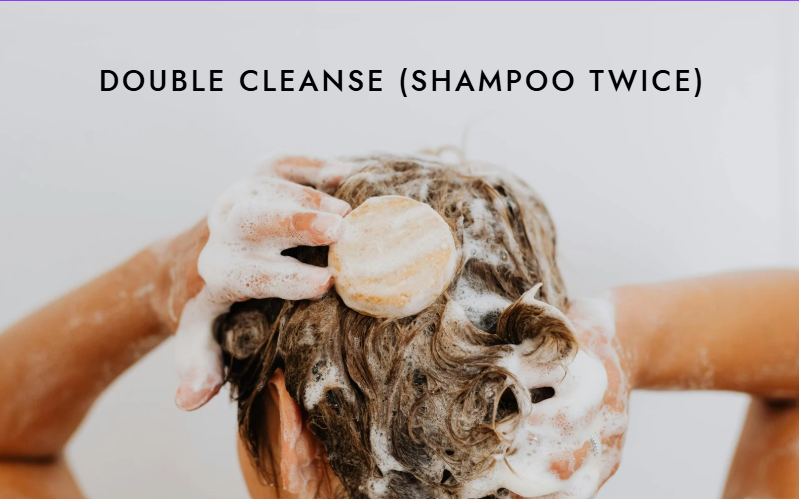
How to double cleanse
Apply shampoo to wet hair and massage into the scalp for 60 seconds. Rinse thoroughly. Apply a second round - you will notice it lathers more freely with less resistance. Massage for another 60 seconds, focusing on the scalp rather than the hair shaft. Rinse completely.
The same shampoo works for both passes. Two to three times per week done properly outperforms daily single-pass washing - because you are addressing the actual source of buildup rather than skimming it.
Choosing the right shampoo for this matters too. For androgenic alopecia specifically, Belle's shampoo rotation explains exactly what earns a place in the routine and why.
Derma Roller for Hair Loss: How Microstimulation Works
Of the adjunct tools available in a scalp care routine for hair loss, microstimulation has the most substantial evidence base outside of topical actives.
Derma stamps and derma rollers create controlled micro-channels in the scalp surface. The body's healing response includes increased local blood flow, release of platelet-derived growth factor and vascular endothelial growth factor, and upregulation of follicle-stimulating signals. These are the same growth factors that clinics target through platelet-rich plasma therapy - microstimulation activates a version of the same response at home.
There is a second benefit specific to topical treatments: microstimulation temporarily increases scalp permeability. A serum applied immediately after derma rolling reaches the dermis - where follicles actually sit - more effectively than one applied to an unprepared scalp.
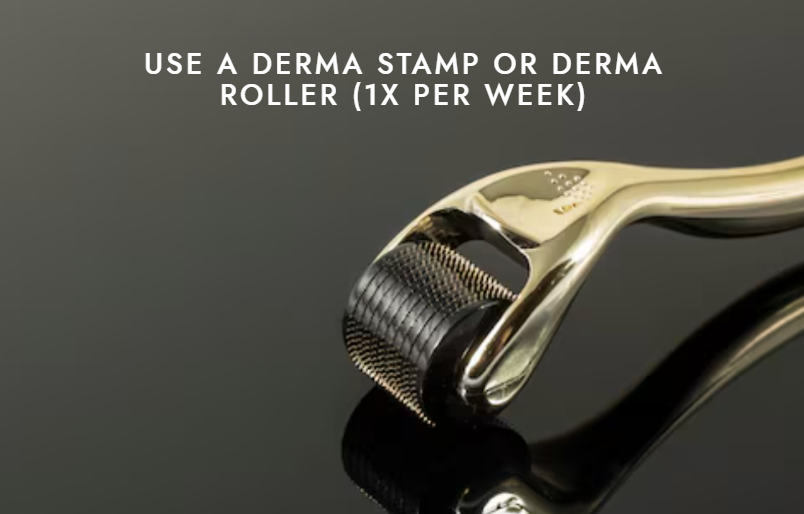
Derma stamp vs derma roller
A derma stamp applies vertical pressure in a controlled area - more precise, better suited to targeted areas of thinning. A derma roller covers more surface area per pass and works well for general stimulation across the crown or hairline. For hair loss, 0.5mm needle depth is the standard starting point.
Protocol
Use on a clean, dry scalp before applying your topical treatment. Work systematically across sections rather than randomly. Clean the device with 70% isopropyl alcohol before and after each use. Apply your serum immediately after, while the absorption window is open.
I would not roll anything over a scalp that is infected, sore, scaly or inflamed. Not in pregnancy either, and not if you are taking blood thinners or isotretinoin, or if you scar easily or are prone to keloids.
Dr Nor Nabilah binti Azmi, Family Medicine Specialist. MD (Warsaw), MICGP (Ireland).
Whatever goes on straight after a roller goes in deeper than it was designed to. That is a reason to be careful about what you reach for, and it is the case Alpha was formulated for: a leave-on scalp serum, applied daily, meant to stay on the scalp rather than be rinsed off it.
Once per week is the correct frequency. The healing response takes several days to complete - over-stimulation disrupts rather than accelerates the process.
Your Topical Treatment: What to Look For and How to Apply It
This is where the follicle-level work happens. Everything before it prepares the environment. Everything after supports the system it works within.
Not all topical treatments for hair loss are equivalent. The meaningful difference is not which actives appear on the label - it is the concentration those actives are delivered at, and whether the formulation base is designed to carry them to the dermis rather than leaving them on the epidermis.
What to look for: patented actives with published supporting data, a multi-pathway approach that addresses more than one mechanism of hair loss simultaneously, and a non-hormonal formulation safe for long-term daily use.
The Alpha Hair Serum was formulated around five patented actives - Capixyl, Procapil, Redensyl, Anagain, and RootBiotec - guided by dermatologists and scientists across Switzerland, France, and Canada. The full formula includes 17 botanical extracts, 10 DHT blockers, and 10 antioxidants within an absorption-optimised base.
Any brand can list Capixyl on a label. What matters is concentration, formulation base, and how many pathways it addresses simultaneously.
How to apply
Part the hair to expose the scalp directly. Apply drops along the parting and any areas of thinning. Massage in with fingertips using circular pressure for 60 to 90 seconds. Do not rinse. Apply daily - consistency over months is what the clinical evidence for these actives is built on. Shedding often increases in the first few weeks, which is covered in shedding when you start a new serum.
Five patented actives in one non-hormonal base, applied where the follicle decides density. This is the step in the routine that nothing else in it replaces.
Alpha Hair Serum - SGD $125Nutrition and Hair Loss: What Your Follicles Actually Need
The hair follicle is one of the most metabolically active structures in the body. It divides rapidly, requires constant energy, and is acutely sensitive to nutritional deficiency. What you eat directly affects what the follicle has available to work with.
Three deficiencies appear consistently in the hair loss literature:
Iron - specifically ferritin
Ferritin is the stored form of iron and one of the most common nutritional drivers of hair loss in women. Low ferritin - even within the range that standard blood panels consider acceptable - is associated with telogen effluvium and accelerated shedding. If you have not had your ferritin tested and you are experiencing hair loss, it is worth doing. Many women find their levels sit below the threshold at which follicles function optimally, despite a normal blood panel result.
Before assuming this is pattern hair loss, get a full blood count and a thyroid test alongside ferritin. Do not start iron on your own, because a low ferritin needs its cause found rather than simply topped up. And if you take biotin, tell whoever takes your blood, because it interferes with some thyroid and heart tests.
A blood test answers what your follicles are missing. It does not change what DHT is doing at the follicle, which is the other half of the picture.
Zinc
Zinc plays a direct role in follicle cell proliferation and in slowing follicle regression. It is depleted rapidly by both chronic stress and restrictive eating - two things that frequently accompany hair loss. Low zinc is common and frequently missed on standard panels.
Protein
Hair is keratin. Keratin requires protein. A consistently low-protein diet limits the raw material available for hair shaft construction regardless of what is happening topically. This is one of the most straightforward nutritional levers and one of the most frequently underestimated.
Practical starting points: red meat or shellfish two to three times per week covers iron and zinc. Eggs, fish, and legumes cover protein. If dietary intake is consistently limited, a targeted supplement covering ferritin support, zinc, and biotin provides a reasonable safety net - not a replacement for a balanced diet, but a useful addition alongside one.
For a deeper look at how androgenic alopecia interacts with nutrition and hormones, our post on androgenic alopecia treatment at home covers this in detail.
Natural DHT Blockers: Managing Hair Loss From Within
Dihydrotestosterone - DHT - is the primary hormonal driver of androgenic alopecia in both men and women. It binds to androgen receptors in genetically susceptible follicles and triggers miniaturisation: each successive hair cycle produces a thinner, shorter hair until the follicle eventually stops producing visible hair.
Topical DHT blockers work at the scalp level. But DHT can also be modulated gently through diet and supplementation - without the side effect profile of pharmaceutical options like finasteride or spironolactone.
Saw palmetto
Saw palmetto inhibits 5-alpha reductase, the enzyme that converts testosterone to DHT. The human evidence in hair loss is thin, and it is worth knowing that before you spend money on it. It is a reasonable addition to a routine, not a reason to build one.
Saw palmetto acts on the same hormone pathway as some prescription medicines, so it is not a neutral supplement. Avoid it if you are pregnant, trying to conceive or breastfeeding, and check with a pharmacist if you take blood thinners.
Dr Nor Nabilah binti Azmi, Family Medicine Specialist. MD (Warsaw), MICGP (Ireland).
Pumpkin seed oil
One randomised, double-blind, placebo-controlled trial - conducted in men with mild to moderate androgenic alopecia, using a supplement blend containing pumpkin seed oil - found a 40% increase in hair count over 24 weeks, compared to 10% in the placebo group. That figure comes from a single small study in men, and it has not been tested in women. As part of a broader routine, it is a low-risk addition worth considering.
Green tea - specifically EGCG
Epigallocatechin gallate inhibits 5-alpha reductase and has anti-inflammatory properties relevant to the scalp environment. Two to three cups daily or a standardised extract provides a meaningful dietary contribution.
These supplements are cumulative, not immediate. None replaces a clinically formulated topical treatment. But as part of a complete scalp care routine for hair loss, they address an internal pathway that topical actives alone cannot reach.
For a detailed breakdown of how Alpha Serum's formulation compares to pharmaceutical DHT blockers, see the comparison of Alpha Serum vs finasteride and spironolactone.
How Sleep and Stress Affect Hair Loss
These are the two variables most frequently dismissed and most consistently underestimated in hair loss recovery.
Sleep
Human growth hormone - the primary signal for cellular repair and regeneration including follicle cycling - is secreted primarily during deep sleep. Chronic sleep deprivation reduces growth hormone output, elevates cortisol, and disrupts the anagen to telogen ratio. Follicles spend less time in active growth phase and more time in resting phase. The result compounds gradually over months.
Seven to nine hours of quality sleep is not a lifestyle aspiration. For someone actively recovering from hair loss, it is a clinical variable.
Stress
Cortisol - the primary stress hormone - directly antagonises hair follicle cycling. Elevated cortisol pushes follicles prematurely into telogen, producing the diffuse shedding pattern characteristic of stress-induced telogen effluvium.
The relationship between stress and hair loss is a feedback loop. Hair loss causes stress. Stress causes hair loss. Addressing both sides simultaneously is the only way to break it.
Consistent sleep and wake times, reducing inflammatory dietary inputs - excess sugar and alcohol both elevate baseline cortisol - and morning light exposure to regulate the cortisol rhythm all have evidence behind them as practical starting points. These are not dramatic changes. They are consistent signals that move the body toward a state where follicle cycling can proceed without hormonal interference.
How a Complete Scalp Care Routine Works as a System
No single element of this scalp care routine for hair loss produces results in isolation - and understanding why is as important as following the steps.
A derma roller without a topical treatment creates stimulation with nothing to absorb. A topical treatment applied over scalp buildup underperforms because the actives cannot reach the follicle environment they are designed to work in. Nutritional support without topical application addresses one pathway while others remain blocked. Sleep and stress work alone slows loss. It does not reverse miniaturisation, because nothing in it reaches the follicle.
Each element addresses a distinct part of the same biological system:
- Cleansing clears the path to the follicle
- Microstimulation opens absorption channels and signals growth factors
- Topical actives work directly at follicle level across multiple biological pathways simultaneously
- Nutrition supplies the raw materials follicles need to cycle correctly
- DHT management reduces the hormonal signal driving miniaturisation from within
- Sleep and stress regulation gives the body the physiological conditions to repair and regenerate
What makes this routine work is not the intensity of any single element. It is the compounding effect of all six operating consistently over time. Follicle biology moves slowly - the hair cycle operates on a timeline of months, not days.
Consistent effort across all six factors, sustained over three to six months, is what the clinical evidence for hair loss recovery is built on.
The results that feel like they arrived suddenly have almost always been building for longer than anyone realised.
| Do this | Avoid this |
|---|---|
| Double cleanse 2-3 times per week | Single-pass daily washing that leaves buildup |
| Derma stamp at 0.5mm once per week | Daily microstimulation - frequency does not accelerate results |
| Apply topical serum immediately after derma rolling | Waiting more than 10 minutes after microstimulation |
| Get ferritin tested if you have not already | Assuming diet is adequate without checking |
| Take DHT-modulating supplements consistently for months | Expecting rapid results from natural supplements |
| Prioritise 7-9 hours of sleep during active hair loss | Treating sleep as optional during high-stress periods |
When to see a doctor. See someone if it came on suddenly, if it is coming out in patches rather than evenly, if your scalp is sore or scaling, or if you are losing hair elsewhere on your body. If the skin where the hair has gone looks smooth and shiny, with no visible pores, that needs to be seen soon, because some kinds of hair loss scar the follicle and that does not grow back.
Important: This post is for informational purposes only and does not constitute medical advice. If you are experiencing significant or sudden hair loss, consult a qualified dermatologist or trichologist for a personalised assessment.
Everything in this routine improves the conditions at follicle level. Alpha is the step that works there.
Shop Alpha Hair SerumFAQ
What is the best scalp care routine for hair loss?
An effective scalp care routine for hair loss addresses six factors: double cleansing to clear follicle-blocking buildup, weekly microstimulation with a derma stamp or roller, a clinically formulated topical treatment applied daily, adequate protein, iron, and zinc through diet or supplementation, gentle DHT management through natural supplements where appropriate, and consistent sleep and stress regulation. No single element works as well in isolation as all six do together.
How long does it take to see results from a scalp care routine?
Some people notice reduced shedding within four to eight weeks of a consistent routine. Visible regrowth - new hair emerging at areas of thinning - typically takes three to six months. Follicle cycling operates on a biological timeline that cannot be significantly accelerated. The first evidence of progress is usually reduced fallout, not new hair.
Is double cleansing good or bad for your scalp?
Good, when done correctly. Double cleansing removes buildup that accumulates around follicle openings and reduces the effectiveness of topical treatments. Use a gentle or sulphate-free shampoo, focus the second pass on the scalp rather than the hair shaft, and condition the lengths afterward. Two to three times per week is sufficient - daily double cleansing is unnecessary and may disrupt the scalp's natural moisture balance.
How often should you derma roll for hair loss?
Once per week at 0.5mm depth is the standard protocol. More frequent use does not accelerate results and can irritate the scalp in ways that counteract the routine. Consistency over months matters more than frequency within a week. Always apply your topical serum immediately after, while the scalp's absorption window is open.
Can stress cause hair loss?
Yes - this is well established clinically. Elevated cortisol pushes follicles prematurely into telogen, producing diffuse shedding. The effect is typically delayed by two to three months after the stressful period, which is why the cause and effect can be difficult to connect. Managing stress is a clinically meaningful part of a hair loss recovery routine.
Can you use a hair serum after derma rolling?
Yes - and it is the recommended protocol. Applying a topical serum immediately after microstimulation increases absorption and allows the actives to reach deeper into the dermis where follicles are located. Use a clean, sterilised device and apply the serum within minutes of the session for maximum benefit.
Alpha Hair Serum SGD $125 · From $1.69/day
Shop Now










































1 comment
This was such an informative and well-explained article! I like how you focused on treating the root cause instead of just covering up hair loss symptoms. A proper scalp care routine really can make a huge difference in long-term hair health. I’ve also found that using quality Hair Growth Serums along with a healthy scalp routine can help support stronger, fuller-looking hair and improve overall scalp condition.
https://www.reecoupons.com/view/kilgourmd